
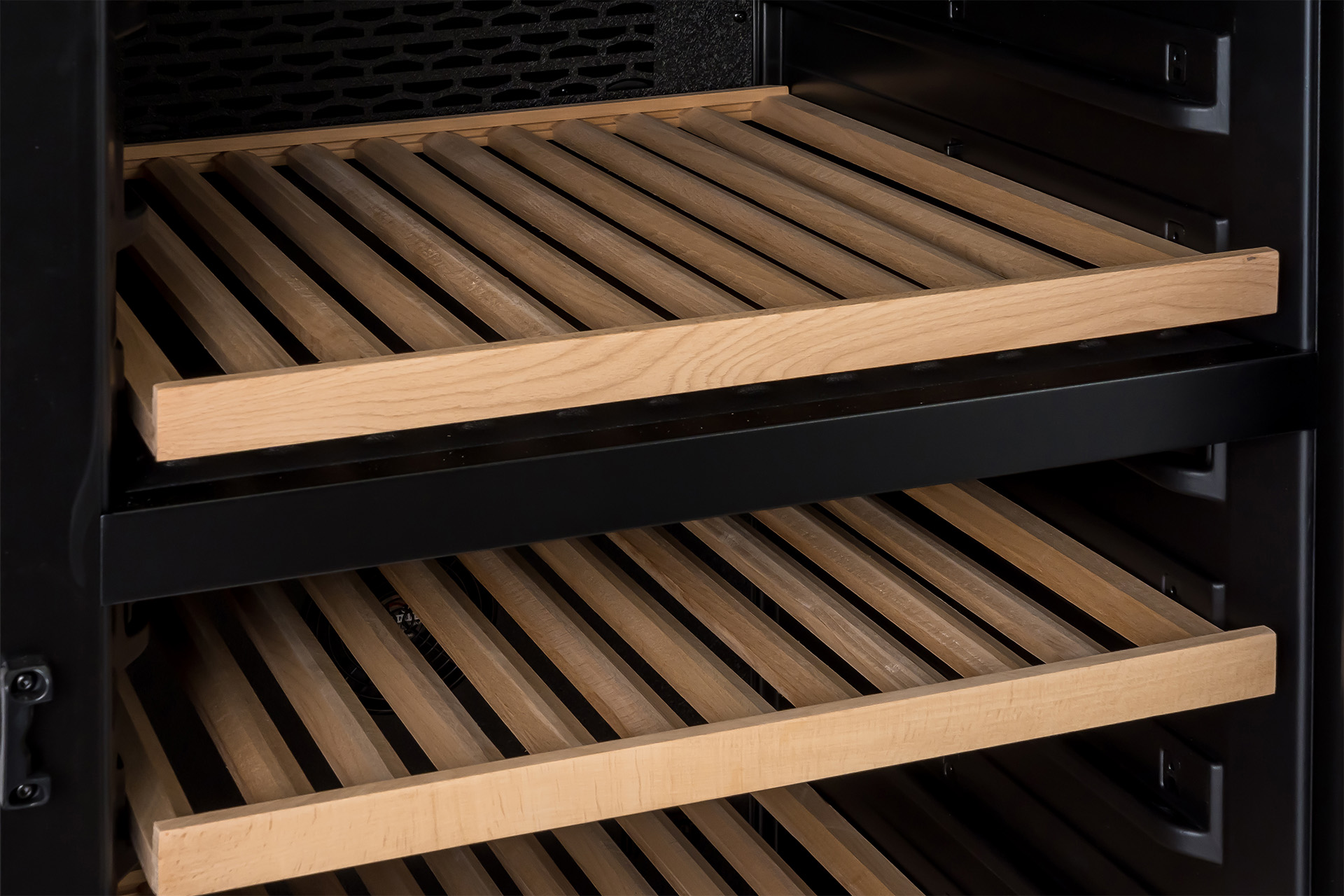
Why Choose a Wine Cellar
Wine is more than a drink. It is a delicate product shaped by time.
Even after bottling, it continues to mature slowly, breathing inside and evolving its aroma and flavor.
A wine cellar is a vessel that protects that passage of time in modern living spaces, helping bring out a wine’s full potential.
In Japan, typical home conditions can be harsh on wine.
In the summer, room temperatures often rise above 86°F. In winter, heated air dries the room out, and once the heater is turned off, temperatures can drop quickly. These sharp swings in temperature and humidity put serious stress on wine.
It is easy to think that a refrigerator is good enough, but in reality,
it is not ideal.
Refrigerators are usually too cold, often around 41°F, too dry, and the compressor creates noticeable vibration.
Closets and underfloor storage can be risky as well, since heat tends to build up in the summer and can spoil the wine.
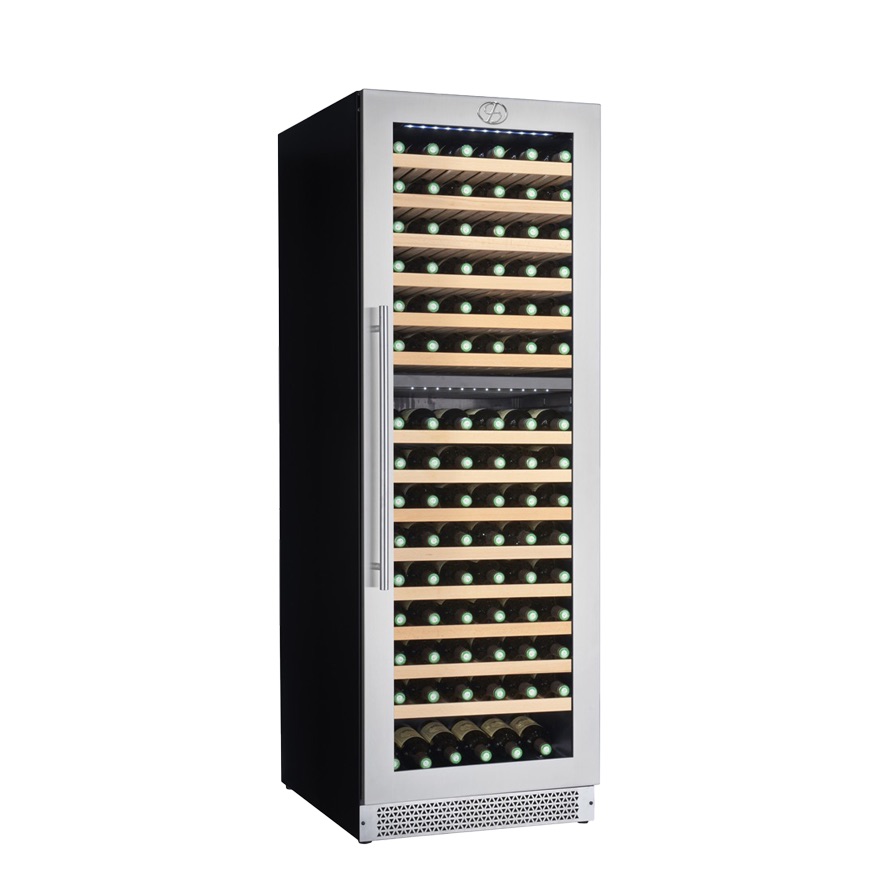
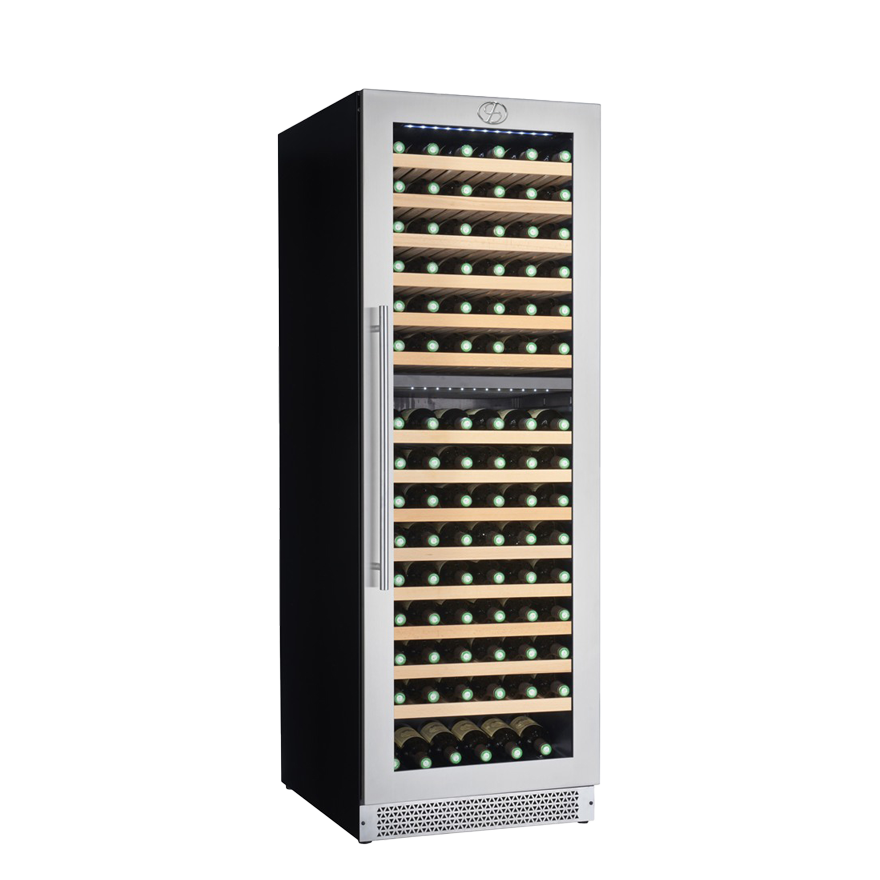
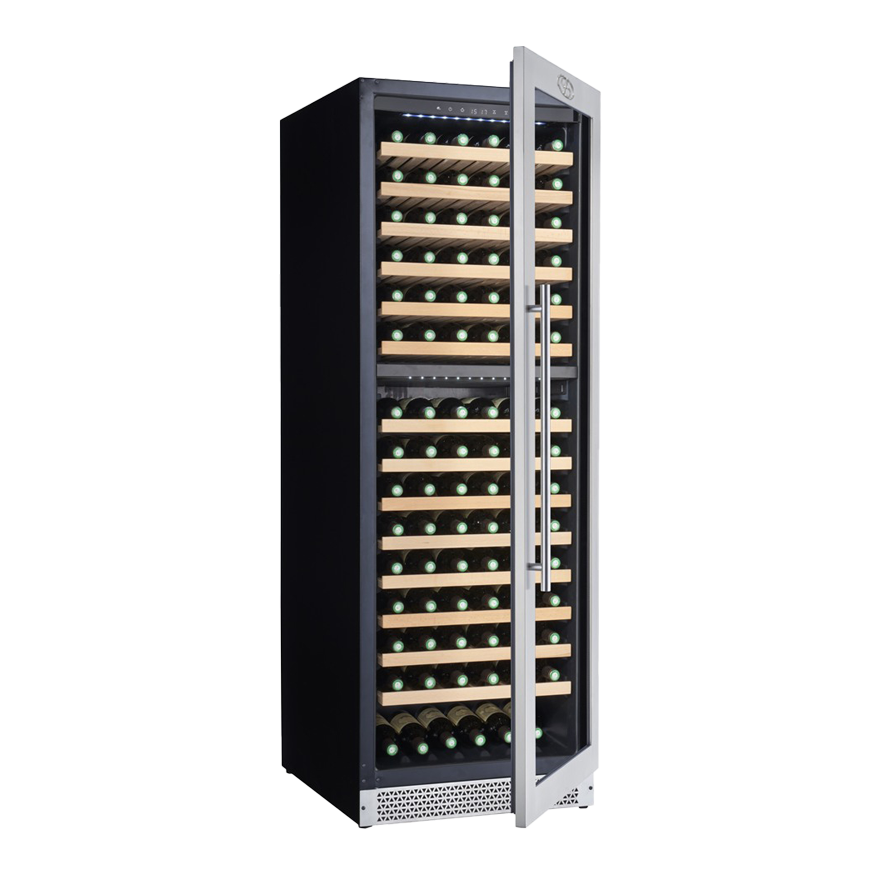
A wine cellar solves these issues at once. It is a dedicated storage unit designed to recreate, through technology, the ideal conditions of a European underground cave: cool, dark, quiet, and gently humid.
Three Key Benefits of a Wine Cellar
1.Precise Temperature Control
The ideal storage temperature for wine is often said to be around 50–59°F, but what matters most is keeping it nearly constant year-round. A quality wine cellar can hold the interior close to your set temperature, for example around 55°F, even when summer temperatures climb above 95°F or winter room temperatures drop to around 41°F.
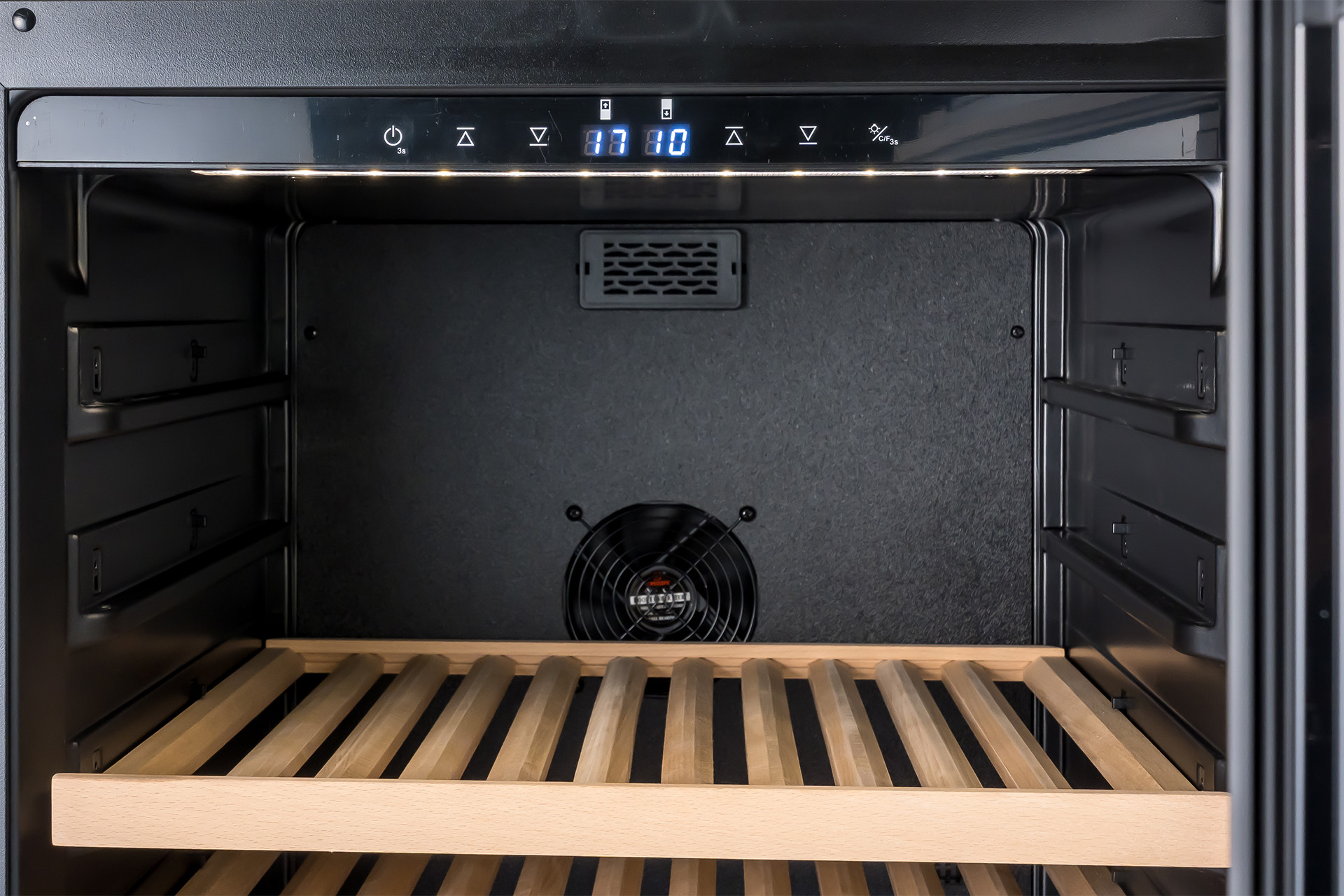
Many units include not only cooling but also a built-in heater. That allows two-way control, cooling gently in summer without over-chilling, and warming softly in winter so the temperature does not fall too low. This steady environment is what supports slow, graceful aging and helps wines develop deeper, more complex aromas over time.
2. Optimal Humidity Control, Protecting the Cork
The fate of a long-aging wine often comes down to the condition of its cork. That is why many wine cellars are designed to keep internal humidity around 70%, helping prevent corks from drying out and shrinking.
If a cork dries out, air can seep in through tiny gaps and oxidize the wine, leading to faded aromas and flavor. On the other hand, if humidity is too high, labels are more likely to develop mold, which can hurt a bottle’s appearance and value.
By maintaining this delicate humidity balance, a wine cellar supports the gentle “breathing” wine needs, while protecting it from excessive oxygen exposure from the outside.

3. Quiet and Darkness, Protecting Wine at Rest
Wine is often said to be sensitive to vibration and light. Even small vibrations can disturb sediment and the movement of compounds inside the bottle, and may interfere with the aging process over time.
That is why high-quality wine cellars are built to minimize vibration, with anti-vibration designs that prevent compressor movement from reaching the shelves, or by using near-silent, low-vibration cooling systems, such as thermoelectric (Peltier) units.
Light matters just as much. UV rays in particular are one of wine’s biggest enemies. Premium models address this with features like UV-blocking glass and carefully designed interior lighting, controlling brightness and wavelength, so you can enjoy displaying your collection without compromising protection.
Taking a moment to admire your favorite bottles is also part of the experience that a wine cellar creates.
A Wine Cellar, An Investment in Experience
Owning a wine cellar is not simply about adding more storage.
First, it is an investment in peace of mind. A great bottle you splurged on, a discovery from a trip, a meaningful gift from someone special, you no longer have to wonder, “Is it really okay to keep this at room temperature?” Instead, you can relax knowing each bottle is resting in the right conditions as time quietly does its work.
More than anything, it is an investment in future enjoyment. Imagine not opening that $35 Bordeaux right away, but letting it sleep in your cellar for five or ten years before pulling the cork. Tannins that once felt firm become smoother, and fresh fruit notes deepen into layered, aged aromas. That pleasure of “raising” a wine is something you can truly experience with a wine cellar.
At the same time, a wine cellar also makes the present moment better. You can keep white wine ready at a crisp 46–50°F, and red wine standing by around 61°F, where its aromas can open up. That way, whenever you feel like a glass, a bottle is already waiting at its ideal drinking temperature.

Two Reasons Why Professionals Choose it
Consistent Experience
Not only at home, but also in restaurants and bars, serving wine at the right temperature and in consistent conditions directly affects a venue’s reputation. Even in professional settings such as teppanyaki or French restaurants, wine cellars are sometimes built in to match the counter or back-bar design, almost like a semi-custom installation.
Equipment That Tells a Story
Professionals see a wine cellar as the foundation for moments like opening a bottle that has been resting inside, and sharing it with guests. Over time, those moments become part of the venue’s story.
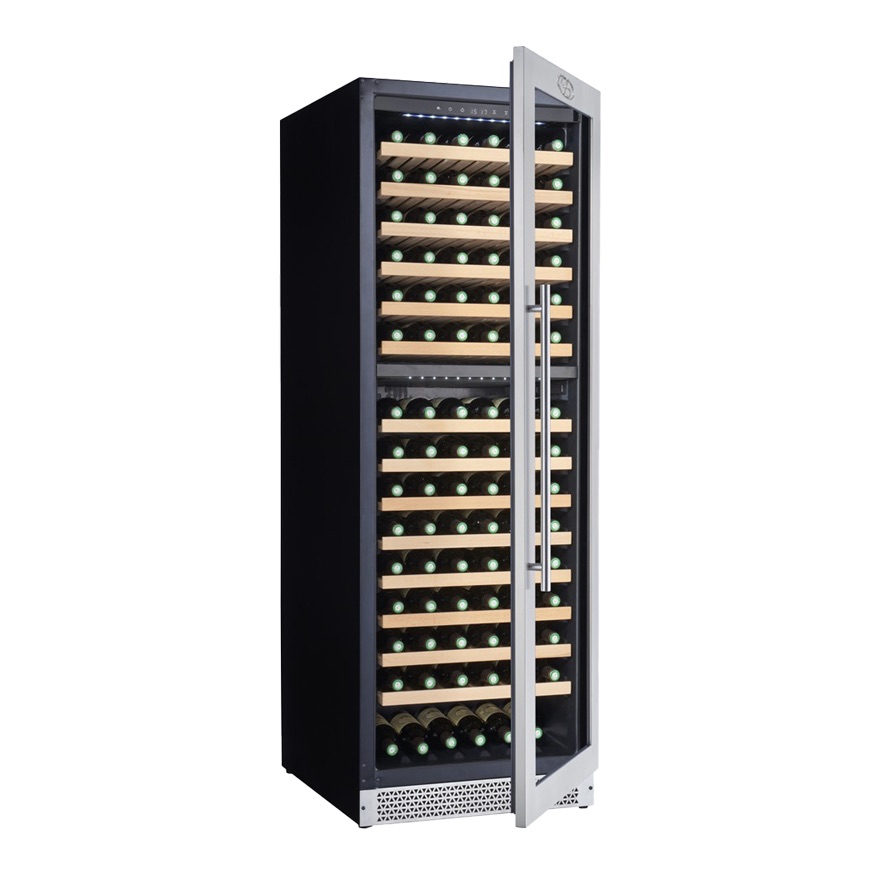
Three Key Benefits
- Reduce “dead stock”:
By protecting wine from temperature swings, dryness, vibration, and light, you can reduce loss and hold inventory in peak condition until it is ready to sell. - Higher per head spend and customer satisfaction:
By offering well-aged bottles and back vintages at their peak, you can expand your by-the-glass and bottle selections, making it easier to raise both the experience value and average spend. - A Mark of Prestige:
Simply having a wine cellar in view from the counter naturally signals that your venue takes wine seriously.
Wine cellar――
A vault for your bottles, a cradle for future moments, and a quiet sommelier that keeps tonight’s wine ready at its best.